Finnboda — Spaces in Stockholm/Nacka
Since 1874
Finnboda Shipyard
From one of Sweden's largest shipyards to vibrant office and commercial spaces in a historic industrial setting by the Saltsjö waterfront.
Scroll
Since 1874
From one of Sweden's largest shipyards to vibrant office and commercial spaces in a historic industrial setting by the Saltsjö waterfront.
Finnboda Shipyard sits in a natural valley between Finnberget and Finnbodaberget on northwestern Sicklaön, with direct access to the Saltsjö and Stockholm's main shipping lane. As early as the 1640s, Dutch entrepreneur Johan van Swindern established a tar works here — the first industrial activity at the site.
In 1874, Bergsund Mechanical Workshop purchased the land to establish a shipyard. The workshop, located at Hornstull on Södermalm, had built ships that had become too large to be locked through Lake Mälaren to the Baltic Sea. Finnboda, with its strategic location by the sea, was the solution.
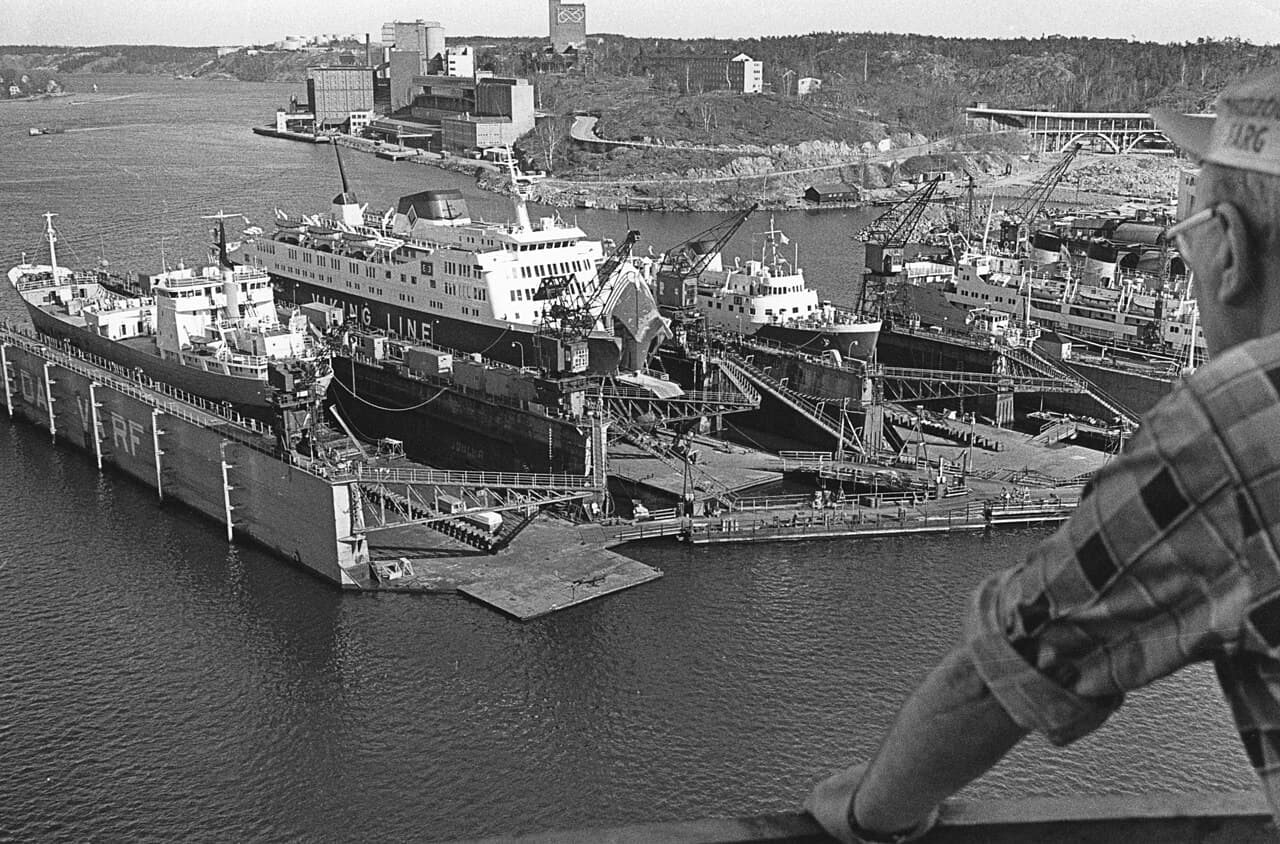
For 113 years — from the first slip in 1878 until bankruptcy in 1991 — hundreds of ships were built and repaired at Finnboda. The shipyard developed into one of Sweden's largest, building everything from tankers and passenger vessels to armored ships and icebreakers for the Russian fleet.
Dutch entrepreneur Johan van Swindern establishes a tar works at Finnboda on Sicklaön — the first industrial activity at the site.
Bergsund Mechanical Workshop at Hornstull purchases Finnboda to establish a shipyard. The ships had become too large to be locked through Lake Mälaren to the Baltic Sea.
The great slip is built to haul ships out of the water. Finnboda Shipyard is operational — Stockholm's gateway to the sea.
The tanker Talmud is launched as the yard's first own-built vessel. At this time, the shipyard employs 280 workers. During the 1880s, the workforce grows to approximately 700.
The yard builds kerosene tankers and gunboats for the Russian fleet, as well as Finland's first icebreaker. Finnboda develops into one of the country's largest shipyards, second only to Götaverken.
Stockholm Shipping Company AB Svea (Sveabolaget) acquires Finnboda and establishes the independent company AB Finnboda Varf.
The Machine Workshop and Canteen Building (today's Markan) are constructed — two buildings that continue as offices and school today.
The characteristic industrial facade of the Frame Workshop is constructed. Today it's heritage-listed and converted into modern office spaces behind the preserved facade.
The international oil crisis devastates Sweden's entire shipbuilding industry. Finnboda shifts to ship repairs only.
On June 11, the 6,500-ton Nordic Link is launched — Finnboda Shipyard's last own-built vessel after 113 years of operation.
Demand for ship repairs drops dramatically. Finnboda Shipyard goes into bankruptcy. The large floating dock is sold to Mexico.
In the empty welding halls, Sweden's most legendary techno club is born. 800 visitors every Saturday night. Police raids, political debate, and a musical legacy that transforms Stockholm's nightlife forever.
HSB Stockholm purchases the entire Finnboda area — all land and buildings — through the subsidiary Finnboda Industrilokaler HB. An architecture competition is announced to design the area's future.
Nyréns Architects present the winning proposal, adopted by Nacka Municipality as Detailed Plan 313. The vision: preserve the maritime heritage and create a mixed neighborhood.
HSB develops Finnboda Harbor with a total of 221 residences, offices, and retail. The old shipyard buildings are carefully renovated — crane rails, docks, and industrial character are preserved.
Vimpelkullen Properties acquires the commercial properties in Finnboda from HSB — seven buildings totaling approximately 9,000 sqm. A new era begins focused on further developing the unique shipyard spaces.
Vimpelkullen owns and manages eight properties — offices, studios, showrooms, restaurants, and retail in a unique shipyard setting by the Saltsjö waterfront. Careful renovations continue, most recently Svarta Ladan in 2025.
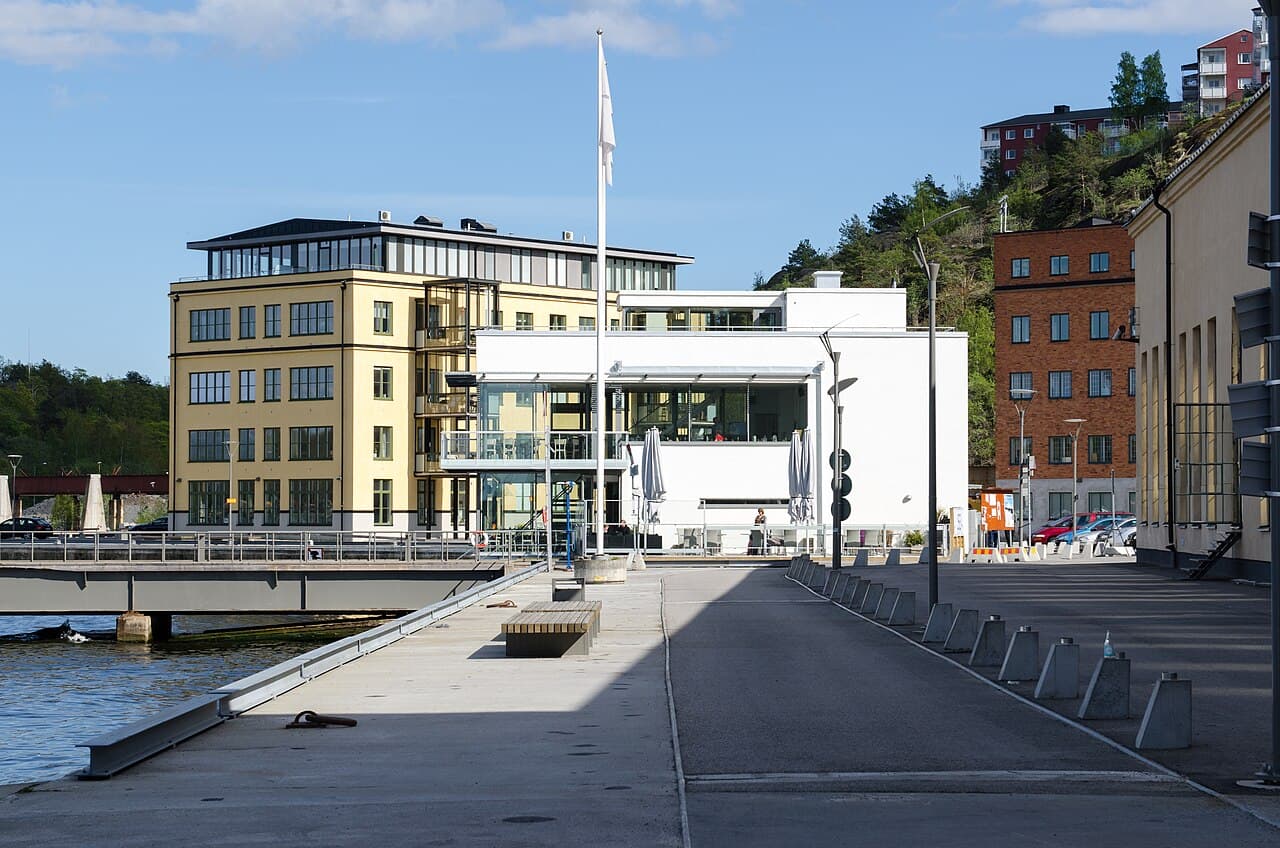
Finnboda today — Industrial history meets modern activity by the Saltsjö
1958 → 1995
From Welding Hall
to Dance Floor
Public domain — Wikimedia Commons
Docklands 1995–2002
In the fall of 1995, the world's best club existed in Finnboda outside Stockholm — a huge industrial space filled with lasers and light effects, extreme sound, and some of the world's best techno DJs.
— The Docklands Book, Mikael Jägerbrand (2006)
In the historic welding halls at Finnboda Harbor, founders Anders Varveus and Mats Hinze created something Sweden had never seen. But Docklands was not just a nightclub — it was an ideological project. Both were active in The Freedom Front, a libertarian network founded in 1990 that had already gained notoriety for pirate radio and civil disobedience. The raw industrial architecture became their arena for something greater: a protest in BPM.
Docklands became the scene where the Swedish techno sound was shaped. Adam Beyer, Cari Lekebusch, and Joel Mull were among those who defined the loop-based, compressed Stockholm techno that differs from the American and German variants. International DJs made pilgrimages here.
In 1996, the Regional Crime Bureau formed a special unit — colloquially known as The Rave Commission — tasked with shutting down Docklands. Police raids became national news. But the controversies and crackdowns only increased the club's legendary status, making it a symbol of the battle between youth culture and authorities.
Docklands and the rave scene forced one of Sweden's biggest changes in entertainment legislation. Stockholm's operating hours were extended from 1 AM to 5 AM — a paradigm shift for all of Stockholm's nightlife. What The Freedom Front had formulated as political theory became reality through bass frequencies and strobe lights.
Docklands was part of a broader Swedish freedom movement at the turn of the millennium. The Freedom Front had since 1990 challenged state control through pirate radio, illegal alcohol sales, and now — illegal parties. The year after Docklands closed, in 2003, The Pirate Bay was founded by The Pirate Bureau. Same DNA — civil disobedience against laws they deemed outdated — but in a new arena: the digital one. From dance floor to file sharing, it was a generation that refused to accept boundaries set by an older era.
The Faces
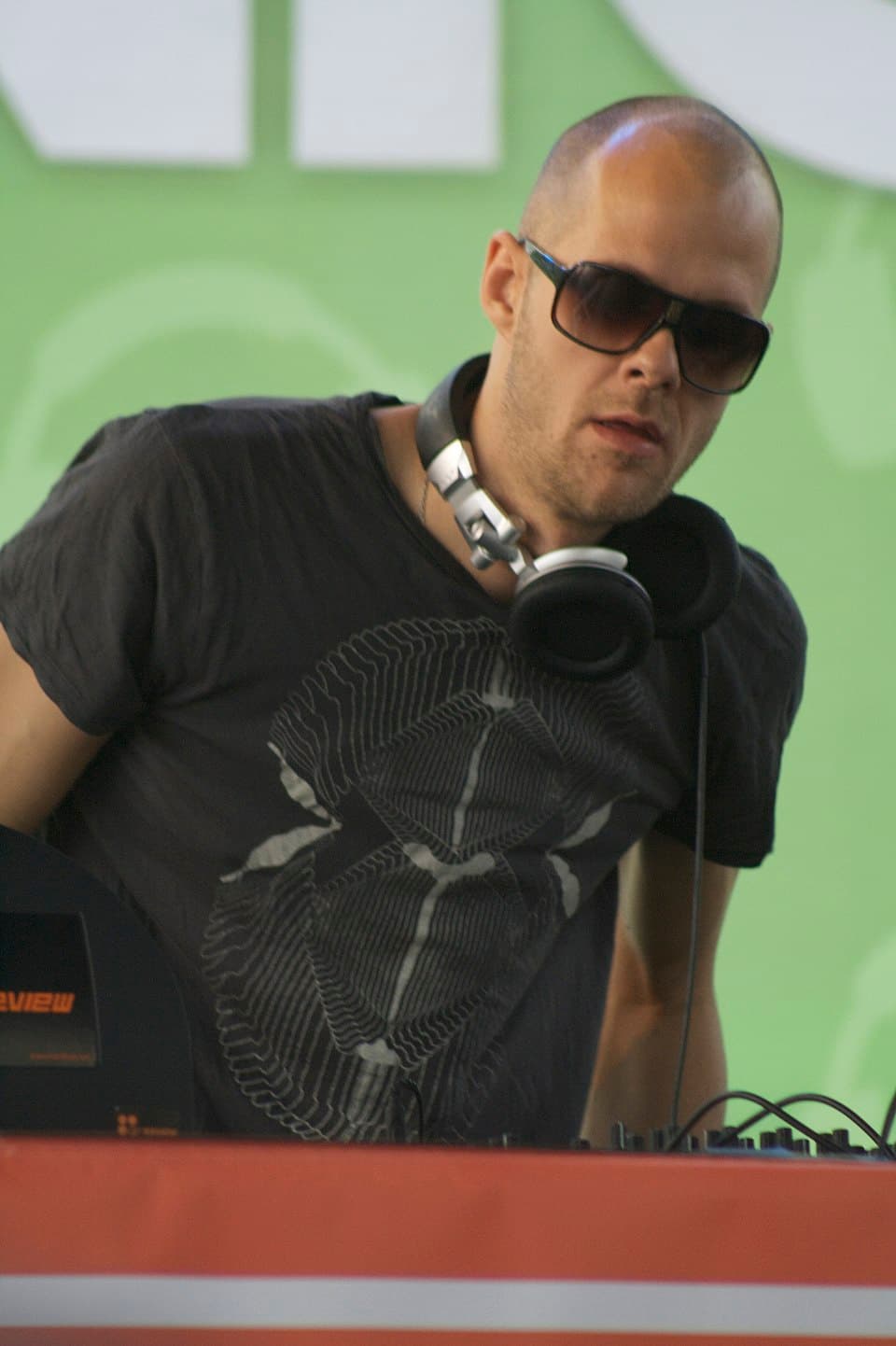
Adam Beyer
Drumcode Records
Stockholm's techno king. Played regularly at Docklands and took the Swedish sound to the world stage. Founded Drumcode — today one of the world's leading techno labels.
CC BY 2.0 — Wikimedia Commons
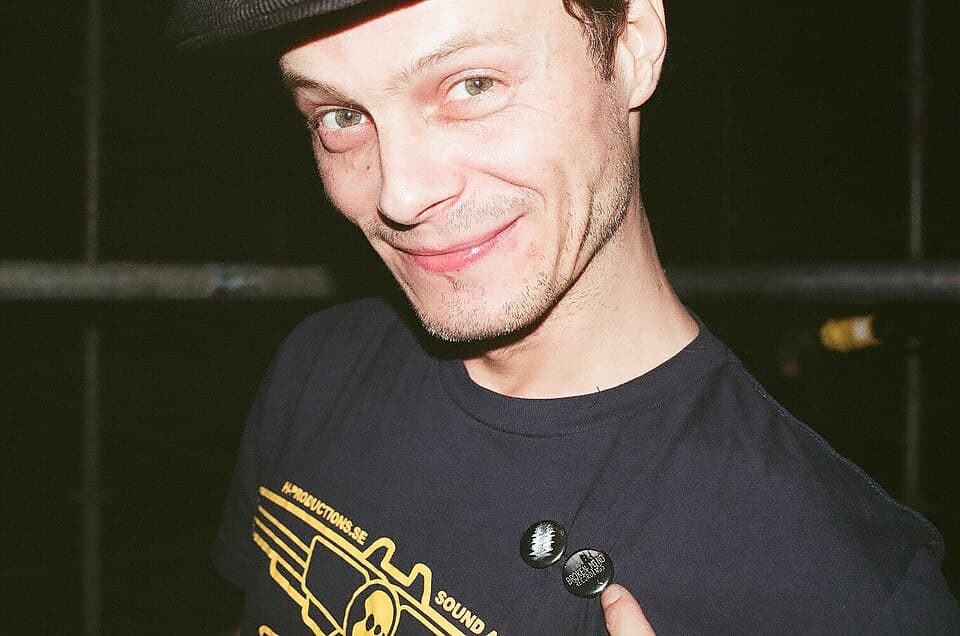
Cari Lekebusch
H Productions / Broken Mind
One of Docklands' most frequent DJs. His experimental approach to techno defined the compressed, loop-based Stockholm sound that differed from Berlin and Detroit.
CC BY-SA 4.0 — Wikimedia Commons
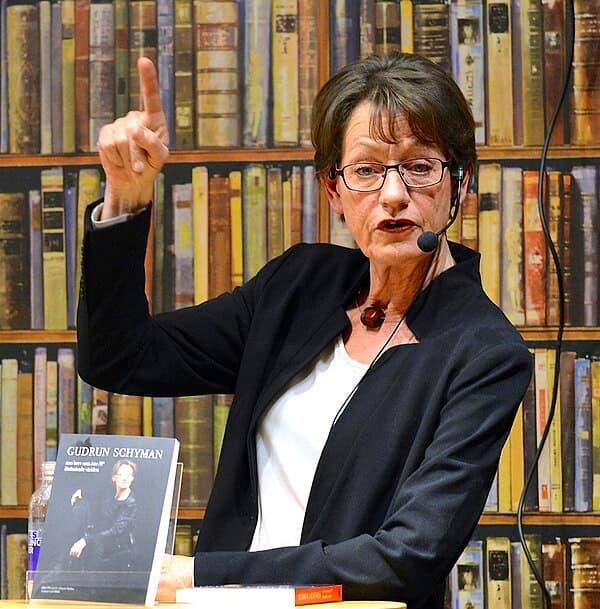
Gudrun Schyman
Left Party Leader
In 1996, Schyman danced at Docklands with her daughter — an event that provoked the political establishment and put the cultural clash between the rave scene and official Sweden in the spotlight.
CC BY-SA 3.0 — FrankieF, Wikimedia
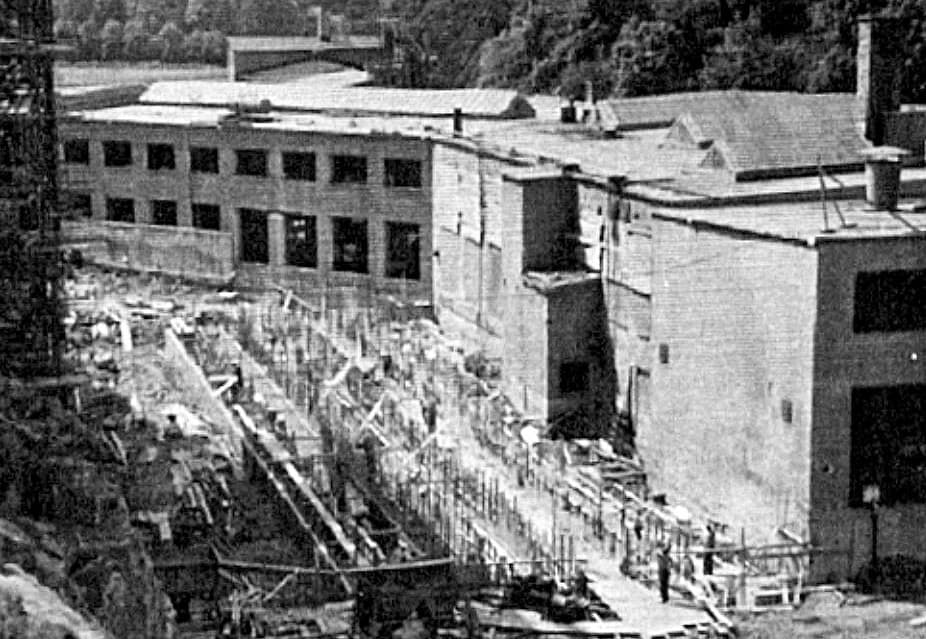
 1958
1958New welding hall is built near the mountain — the future dance floor
 2022
2022The same hall today — converted into residences, offices, and restaurants
 Razzia
The Rave Commission — the police special unit that hunted Docklands
CC BY-SA 2.0 — Wikimedia Commons
 The Dance Floor
Techno club with DJ booth — this is what a Saturday night could look like
CC BY 2.0 — Wikimedia (illustrationsbild)
Docklands Timeline
Docklands was more than a club — it was a cultural movement that permanently changed Sweden's nightlife, legislation, and music scene. The subculture that once sparked moral panic became mainstream. Techno is played today at Berns, Under Bron, and Slakthuset. And it all started in a welding hall at Finnboda Shipyard.
The restaurant in the Docklands space was long called Docklands, but was renamed to Finnboda Harbor Restaurant when new tenants took over — a deliberate choice by Vimpelkullen to strengthen the place's identity and increase awareness of Finnboda as a destination.
Want to feel what it was like to stand on the Docklands dance floor? Go down to Harbor Square at Finnboda Square. There rests an artwork made of thick steel plates — the same plates that once formed the floor of the demolished welding hall. These massive steel plates gave Docklands its legendary raw sound — the bass bounced through the steel and created a resonance that no other club in Stockholm could match.
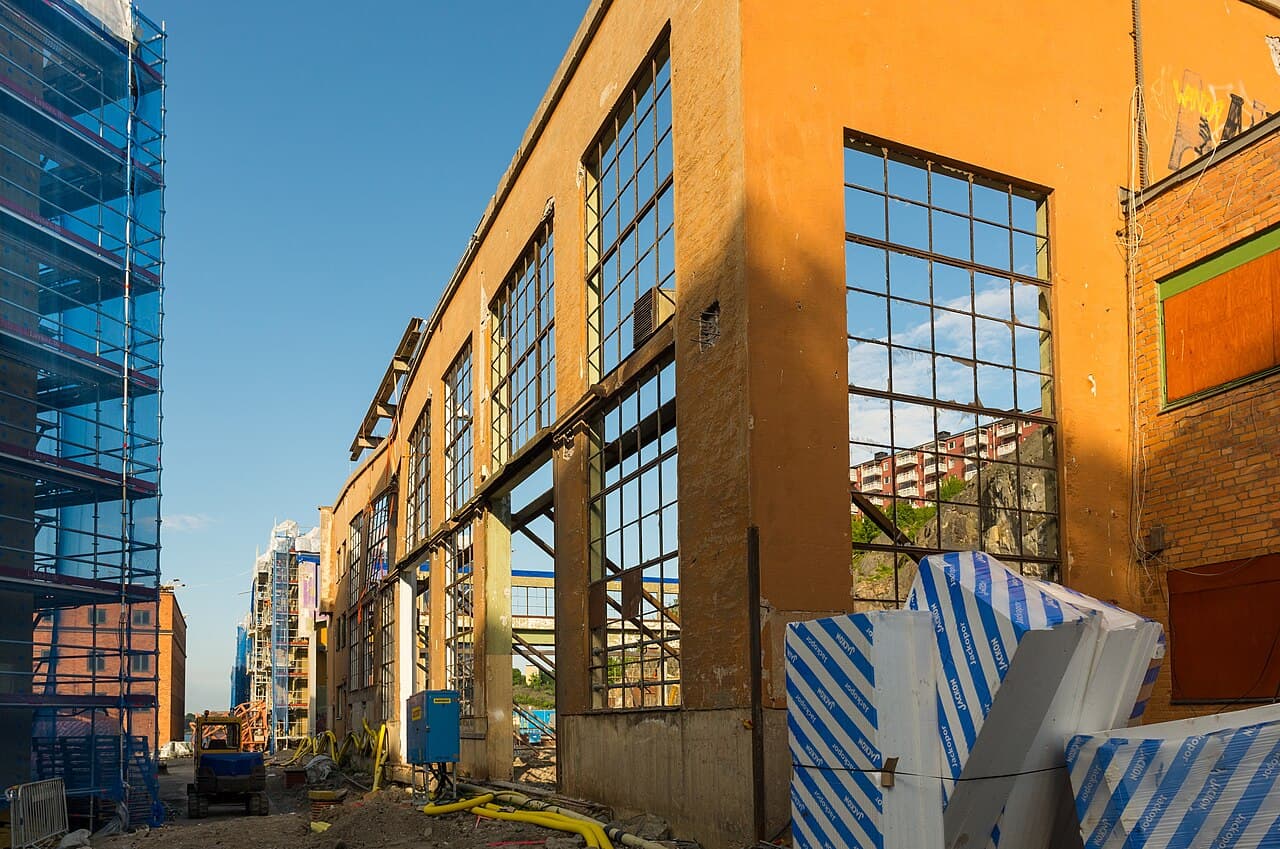
Where It All Happened
Docklands existed for seven years, but its impact on Swedish music, nightlife, and legislation lives on forever. Finnboda Shipyard — a place where history continues to be written.
CC BY-SA 3.0 — Wikimedia Commons
Every building in Finnboda tells its own story. During the transformation, the industrial character has been preserved — massive steel structures, high ceilings, and raw materials meet modern technology and comfort.
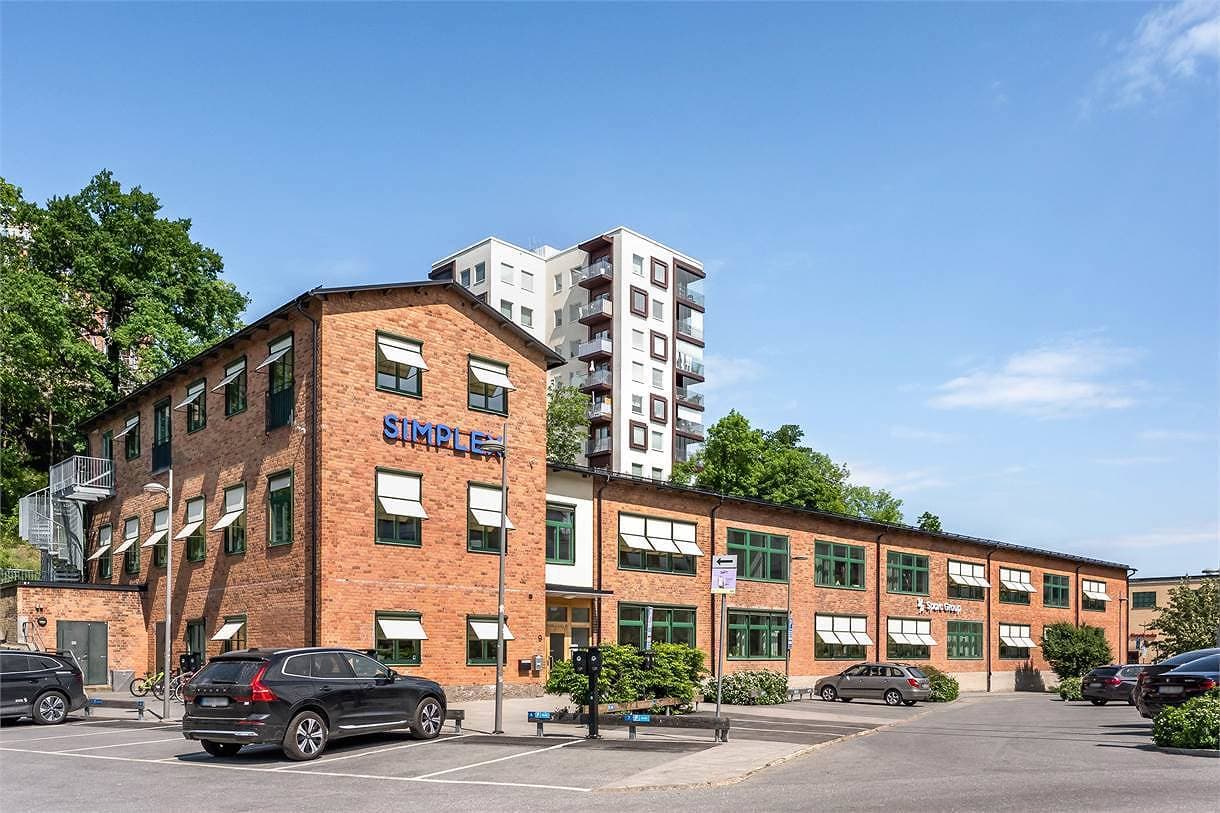
Finnboda Varvsväg 9
The shipyard's historic canteen building where hundreds of workers ate lunch during the industrial era. Completely renovated in 2014 into modern school and office spaces.
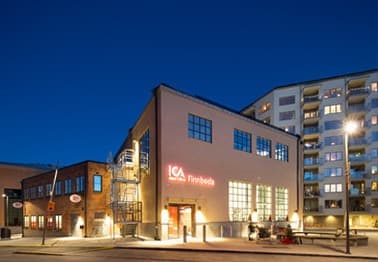
Finnboda Varvsväg 12
Where ship frames — the rib-like structures that give a ship its form — were shaped. The heritage-listed industrial facade from 1944 was preserved when the building was converted into three floors of offices in 2015.
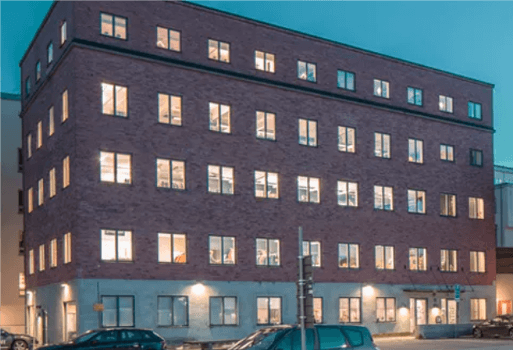
Finnboda Varvsväg 16
The shipyard's administrative center in five stories at Finnboda Square, with views over the Saltsjö. Office spaces since 2002.
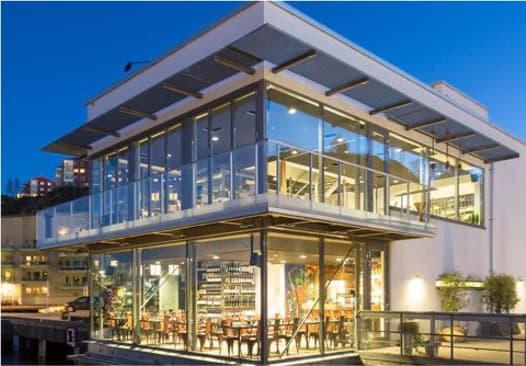
Finnboda Varvsväg 18
Two-story restaurant building with roof terrace, partially extending over the Saltsjö with views toward Djurgården. A new building that blends seamlessly into the shipyard environment.
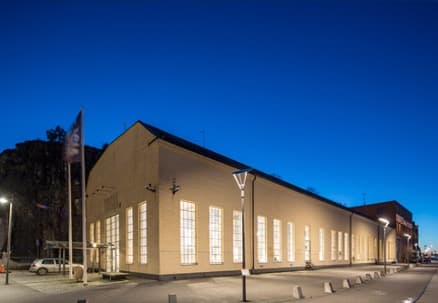
Finnboda Varvsväg 19
Originally built for steam engine manufacturing — the heart of shipyard production. Today home to retail, showroom, events, and studio activities at the quay in northwestern Finnboda Harbor.
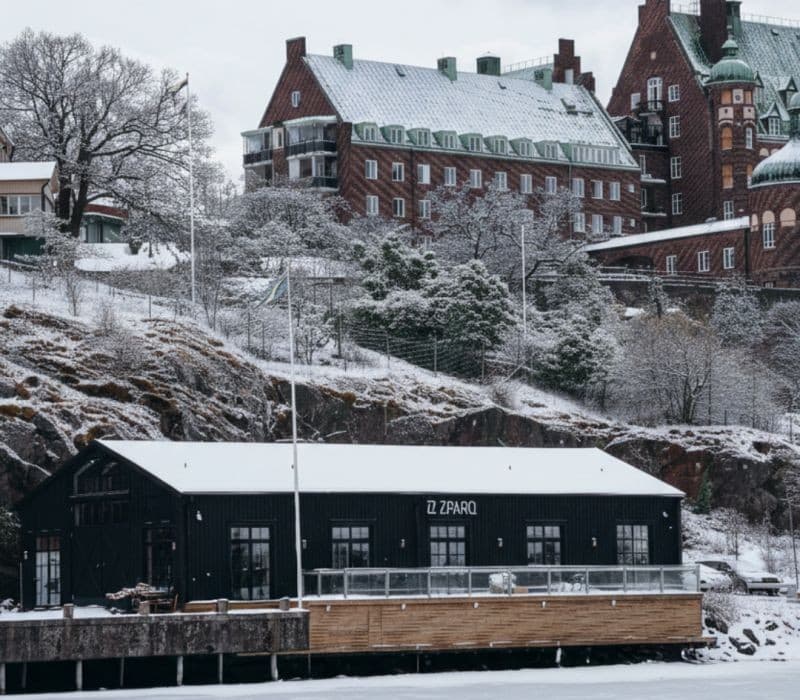
Finnboda Varvsväg 22
A distinctive building of approximately 335 sqm with its own crane, boat harbor, and views over Stockholm's main shipping lane. Carefully renovated in 2025 with energy rating B. Home to an award-winning sustainable marine technology company.
After the bankruptcy in 1991, the shipyard area stood empty. In 1997, HSB Stockholm purchased all of Finnboda — all land and buildings — through the subsidiary Finnboda Industrilokaler HB. The following year, Nyréns Architects won HSB's architecture competition with a proposal that Nacka Municipality adopted as Detailed Plan 313.
HSB's vision was to create a mixed neighborhood that preserved the maritime heritage. During 2002–2015, Finnboda Harbor was developed with 221 residences, offices, and retail. Crane rails, concrete foundations, and industrial character were preserved.
In 2016, Vimpelkullen Properties acquired the commercial properties from HSB — seven buildings totaling approximately 9,000 sqm. The philosophy has since been to continue preserving the industrial character — the massive steel structures, the high ceilings, the raw materials — while adding modern technology, energy solutions, and comfort.
Today, Finnboda is home to creative companies, tech firms, restaurant operations, and innovative businesses that appreciate the industrial character and proximity to water and the city center.
Photo Archive
Images from Wikimedia Commons — all free to use under Creative Commons or public domain.
Finnboda is located on Sicklaön in Nacka Municipality, strategically positioned at Stockholm's main shipping lane with direct views over the Saltsjö and Djurgården. Despite its central feel, the area offers a calm, green waterfront environment.
Finnboda Today
From sustainable fashion and Swedish design to biotech and marine innovation — Finnboda brings together companies that value character, creativity, and waterfront proximity.
Machine Workshop — Varvsväg 19A
Award-winning Swedish furniture design with showroom in the historic steam engine workshop. Fogia has been in Finnboda since 1999 — one of the area's most loyal tenants with over 25 years on site.
Workshop Office — Varvsväg 16
Pioneers in circular outdoor activities and sustainable textile production. Houdini has offices and showroom in the Workshop Office with views over the Saltsjö.
Markan — Varvsväg 9
Parent company behind well-known brands like Peak Performance, Craft and others. Offices in Markan — the historic canteen building.
Frame Workshop — Varvsväg 12
Office operations behind the heritage-listed industrial facade. Imola leases a total of 986 sqm spread across two floors.
Frame Workshop — Varvsväg 12
ICA Finnboda — a grocery store in the historic welding and workshop hall. The industrial character makes this one of Stockholm's most unique ICA stores.
Markan — Varvsväg 9
School facilities in the historic canteen building. Nacka Municipality operates education in 564 sqm — from shipyard lunches to classrooms.
Svarta Ladan — Varvsväg 22
Award-winning greentech company in sustainable marine technology — in Finnboda's most distinctive building with its own crane, quay, and views.
Workshop Office — Varvsväg 16
Biotechnology company with global parent. Promega has had offices in the Workshop Office since 2007 — one of Finnboda's oldest leases.
Docklands — Varvsväg 18
Waterfront restaurant with lunch, dinner, and after-work — in the same space where Stockholm's legendary Docklands techno club once thrived.
Varvsväg 16D
Local gym providing Finnboda residents and office workers the chance to train on-site — convenient and intimate.
View available spaces or contact us to book a tour of our unique shipyard spaces.